
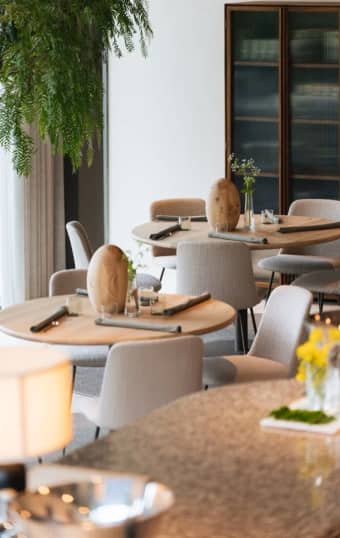




Bolenius Restaurant
Amsterdam4.9
Bolenius brings Dutch produce to the centre of the plate, with a kitchen garden and greenhouse at the edge of Rembrandtpark supplying much of what reaches the table. The restaurant is built around the idea that vegetables, herbs and seasonal ingredients deserve the leading role, while fish and meat play a supporting part. Glass walls open onto the park, blurring the line between garden and dining room. Chef Luc Kusters, a founding figure of the Dutch Cuisine movement, has shaped a menu where roughly 80 per cent of each plate is plant based. Weekly rotations follow the micro seasons, and dishes are built around what the garden and local producers can offer at that moment. A botanical cocktail bar draws on the same herbs growing outside the window.
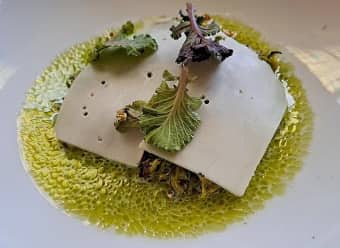
Café Binnenvisser
Amsterdam4.3
Café Binnenvisser occupies a striking corner building on Bilderdijkstraat, where stained glass windows and vintage furniture set the tone for a modern take on the traditional brown café. The kitchen, led by Guus Lourijsen, treats vegetables as the centrepiece of every dish, building strong flavours around what arrives each week from local growers. Meat and fish feature as accents rather than centrepieces; the weekly rotation of roughly five or six dishes is shaped by seasonal availability. Natural wines and craft beers fill the drinks list, and a bar menu of oysters, cured meats and cheese from named Dutch producers rounds out the offer. Walk-ins are welcome at any time. Reservations are only taken for groups of five or more, and the atmosphere sits somewhere between a neighbourhood pub and a considered dining room.
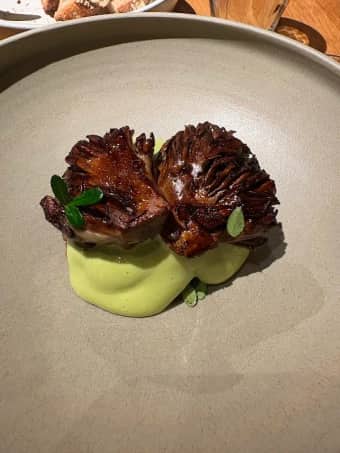
Choux
Amsterdam4.6
Choux occupies a former tin factory and gin distillery on the IJ waterfront, its bright red facade marking a kitchen built almost entirely around vegetables. Chef Merijn van Berlo and sommelier Figo van Onna opened the restaurant in 2015 after a series of pop-up ventures, driven by the conviction that vegetables should occupy the centre of the plate. The five-course tasting menu, presented orally rather than printed, changes with the seasons and draws from nearby growers for its vegetables, herbs, and flowers. Animal protein plays a supporting role at roughly 10% of the menu, limited to game and shellfish. An open kitchen and industrial interiors softened by warm wood set a tone that is refined yet deliberately relaxed. Van Berlo co-created 621 Ferments with Lindenhoff, upcycling kitchen waste streams into koji-fermented garums. The wine list, overseen by Van Onna through sister company Zuiver Wijnen, centres on natural and biodynamic bottles.
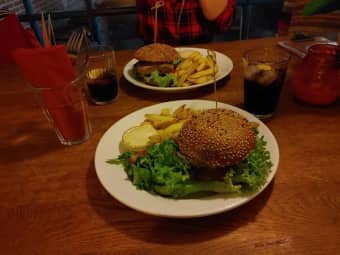
Cultureel Eetcafé 'Skek
Amsterdam4.5
Skek is a vegetarian eetcafé on Amsterdam's Zeedijk, operated as a cooperative without hierarchy under the Stichting Kriterion foundation. Every member of the team receives equal pay and takes part in shaping how the kitchen, the programming and the business run. The result is a venue that feels less like a restaurant and more like a second living room. The fully vegetarian menu changes every three months, tested by the kitchen committee and tasted by the whole team before it goes live. Dishes range from pulled jackfruit burgers and eggplant tempura to goat cheese tartlets with pear and thyme. Live music fills the room several evenings a week, with jazz, cabaret, open mics and rotating art exhibitions rounding out a cultural programme that keeps the Zeedijk address alive well past dinner service.
De Kas
Amsterdam4.7
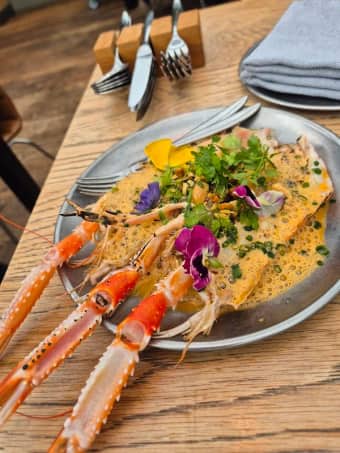
De Kas occupies a 1927 municipal greenhouse in Park Frankendael, Amsterdam Oost. The glass structure frames the kitchen's purpose: growing, harvesting and cooking vegetables on the same day. Over 300 varieties of vegetables, herbs and fruits are cultivated across the on-site gardens and a second plot in the Beemster polder, with the menu composed around whatever the harvest delivers each week. Chefs Jos Timmer and Wim de Beer, who took ownership in 2018, apply a light, Mediterranean approach to Dutch-grown produce. The fixed menu changes weekly, shaped entirely by what the gardens yield. Vegetables occupy the centre of every course; fish or meat appears in roughly one dish in ten. In summer, lunch is served on a terrace among the herb beds that supply the kitchen. A single evening seating and an open kitchen designed by Studio Piet Boon set an unhurried pace.
Rijks
Amsterdam4.4
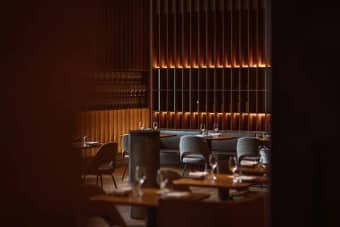
Rijks occupies the Philips Wing of the Rijksmuseum, its floor to ceiling windows framing an open kitchen where the brigade works with precision. Joris Bijdendijk has shaped the restaurant around what he calls the cuisine of the Low Countries: a repertoire built on Dutch produce, enriched by flavours from centuries of trade. The menu moves between land and sea. Red beet millefeuille with tomasu soy sauce, grilled celeriac with North Holland Messeklever cheese, Zeeland oysters and heritage breed meats all feature, but vegetables take the lead more often than not. Bijdendijk co-founded the Low Food foundation, dedicated to rethinking Dutch gastronomy around sourcing and inclusion. That conviction runs through the kitchen: direct producer relationships, Slow Food Chefs' Alliance membership, and a wine list recognised by Star Wine List.
URBN By Novotel Amsterdam City
Amsterdam4.2
URBN sits inside the Novotel Amsterdam City on Europaboulevard, a 160 cover restaurant open from early morning through dinner. Chef Frank-Jan Mutsaers leads a kitchen that changes its menu with the seasons, built around what the chef calls fresh, pure and authentic cooking. The space blends a long bar, open lounge seating and a terrace, giving it a relaxed feel that serves hotel guests and locals alike. Weekly rotating chef's specials add variety beyond the core card. The restaurant operates under the hotel's Green Key Gold certification, and 25% of dishes are designated biodiversity friendly. Accor's wider responsible food model, which includes AI tracked food waste reduction through a partnership with Orbisk, shapes kitchen operations behind the scenes.
Café Cress
Amsterdam4.9
Caffé Cress occupies a bright, double-windowed corner on Johan van Hasseltkade, looking out across the IJ from Amsterdam-Noord. The room is laid out like a living room with games and colouring sheets on the tables, a south-facing terrace, and a clear preference for everyday hospitality over occasion dining. The restaurant opened in late 2023 under three co-owners who previously worked together at Floreyn: Cyril Martineau and Niamh Groentjes run the kitchen, while Jeffrey Klepper looks after the floor and the wine list. Cyril brings a French foundation, Niamh layers in Asian influence, and the dialogue between the two shapes the cooking. The menu changes every two weeks around what Cyril finds each morning at the Albert Cuyp market, with bread from city bakery Van As, a cheese course from Fromagerie Kef, and coffee from Zwarts'.
Tolhuistuin
Amsterdam4.2
Café Restaurant THT sits in the pavilion of Tolhuistuin, a cultural free space in Amsterdam Noord with views over the IJ. The kitchen, led by chef Rob Hofland, serves small plates from around the world designed for sharing, with dishes arriving within ten minutes at an accessible price point. Around three quarters of the menu is plant based, making it a strong destination for vegetarians and vegans without excluding flexitarian diners. Meat, fish and dairy come from named regional suppliers with organic and certified credentials, while seasonal produce shapes a menu that rotates quarterly. The restaurant opens onto an 18,000 square metre garden and riverside terrace, set within a cultural venue hosting concerts, theatre and community events year round.
Restaurant Merkelbach
Amsterdam4.3
Restaurant Merkelbach occupies the coach house of Huize Frankendael, the last surviving 18th-century country estate within Amsterdam. Chef Geert Burema, who initiated the Slow Food Chefs Alliance in the Netherlands, has built a kitchen that runs on seasonal, locally sourced ingredients since 2004. The regular lunch menu is fully vegetarian, with herbs picked from the ecological park that surrounds the building. For group dinners, the kitchen extends into meat from Lindenhoff farm in Baambrugge and day-caught North Sea fish from Goede Vissers, both prepared whole-animal. A large garden terrace overlooks Frankendael Park, offering a distinctly green dining setting within the city.
SLA - Amstelveenseweg
Amsterdam · Vondelpark4.1
SLA Amstelveenseweg sits at the southern entrance to the Vondelpark, on a leafy stretch of one of Amsterdam's most recognisable avenues. The branch shares the chain's open, design-led interior by Standard Studio, with indoor and outdoor seating that catches the afternoon sun. Ordering is counter-service: guests choose a base, toppings, and dressing from the seasonal menu and collect at the pass. The format suits a quick solo lunch as comfortably as a longer meal with friends, and takeaway or delivery is available for those heading straight into the park.
Café Remouillage
Amsterdam4.7
Chef Jonathan Sparber runs a solo kitchen at the corner of Vechtstraat and Trompenburgstraat, turning seasonal produce into small plates built from two to four components. His training spans French kitchens in Amsterdam (Toscanini, Vermeer, La Rive) and years spent cooking across Japan, Singapore, Hong Kong and Taiwan. The result is a stripped back style he calls complex simplicity. The room seats around 30, with a food bar facing the open kitchen and a terrace on the street. Colourful chairs, candlelight and Bauhaus details set a casual, unhurried tone. Guests order incrementally, and Sparber serves both food and wine himself. Bread is fermented slowly from water, flour and yeast. Kefir and kombucha are made in house, and the drinks list centres on natural, biodynamic and low intervention wines from producers such as Anders Frederik Steen and Christian Tschida.
Maijard Smashburgers Berenstraat
Amsterdam4.5
Maijard takes a single cooking technique and builds an entire kitchen around it: the Maillard reaction applied to thin beef patties at maximum heat, producing a dark, lacy crust while the centre stays juicy. The name itself is a Dutch play on Maillard, and the open kitchen at Berenstraat puts the process on full display for guests. The menu stays deliberately tight. Three burgers, loaded smashed potatoes and a custom citrus lager brewed with Jopen round out the offering. Founded by a group of friends in 2022, the Berenstraat outpost in De 9 Straatjes followed the original Rozengracht location, adding breakfast service from ten in the morning.
Sababa Oud-West
Amsterdam4.4
Sababa West occupies a compact spot on Van Hallstraat, tucked into a small square in Amsterdam's Oud-West neighbourhood. The space is intimate, with a handful of tables inside and a few more on the square itself, lending the branch a relaxed, neighbourhood feel. The format is fast-casual counter service: order at the counter and take a seat, or grab your pita to go. Falafel, halloumi and roasted cauliflower bowls sit alongside kebab and shawarma, with roughly a third of the menu fully vegan. Sourdough pita is baked fresh, and the kitchen keeps things simple and flavour-led.
SLA - Utrechtsestraat
Amsterdam · Grachtengordel4.4
SLA Utrechtsestraat sits on one of Amsterdam's busiest neighbourhood streets, a short walk from Rembrandtplein. The bright, modern interior was designed by Standard Studio, with clean lines and an open layout that puts the kitchen's daily preparation on display. Ordering is at the counter: choose from ready-made salads, grain bowls, warm bowls and pitas, or build your own from the seasonal selection. A small pavement terrace offers outdoor seating in warmer months. Wi-Fi is available, and the restaurant operates on a walk-in basis with no reservations. Note that access involves a small step at the entrance.
Kanarie Club
Amsterdam4.0
Kanarie Club occupies a former tram depot on the Bellamyplein in Amsterdam's Oud-West, part of the De Hallen cultural complex. The interior, designed by Studio Modijefsky, keeps the industrial bones visible: high ceilings, raw surfaces and exposed beams, set off by a bold yellow colour scheme and a sunken pool bar. The kitchen builds its menu around shared plates, with vegetables taking the lead. Sourdough from neighbourhood bakery Fort Negen anchors the bread offering, while the cheese board draws from the nearby Ten Kate market. Craft sodas, local Amsterdam beers and a wine list leaning towards natural and biodynamic producers complete the picture. By day the space doubles as a flexible workspace with coffee and breakfast bowls; by evening it fills with diners, cocktails and vinyl DJ sets on the weekends.
A beautiful mess Amsterdam
Amsterdam4.6
The menu is built around Middle Eastern and Mediterranean mezze, designed for sharing. Flatbreads arrive freshly baked and pair with dips such as hummus, moutabal and muhammara. Vegan options run deep, from oyster mushroom shawarma and spicy lentil soup to herb salads and caramelised carrots, making the menu well suited to plant based diners. Meat dishes are halal across the board, with highlights such as spicy Iraqi chicken and koefte. The kitchen also accommodates gluten free and dairy free requests. More details available here
Bagels & Beans Amsterdam Bos & Lommerweg
Amsterdam4.2
Bagels & Beans has been part of Amsterdam's cafe landscape since 1996, when the first branch opened on Ferdinand Bolstraat in De Pijp. The Bos en Lommerweg location sits in Bos en Lommer, a residential neighbourhood west of the centre, serving breakfast and lunch seven days a week. The menu is built around organic bagels with a wide range of fillings, from plant based cream cheeses and hummus to smoked salmon and organic turkey. About a third of the bagels are vegan by default, and all drinks can be made with oat, soy or almond milk. Salads, soups, fresh juices and specialty coffees round out the offering. The space is relaxed and spacious, with outdoor seating and free Wi-Fi. Counter service and takeaway keep the format accessible for both a quick stop and a longer stay.
Cafe Restaurant Metro
Amsterdam4.2
Cafe Restaurant Metro sits at the front of the Nxt Museum building on Asterweg, anchoring Amsterdam Noord's creative quarter. An open kitchen and a long concrete bar set the tone for the space, which feels relaxed and unhurried despite its scale. The kitchen is led by head chef Rients de Jong, with Siem Feijen running the in house bakery that supplies sourdough and pastries from early morning. The restaurant runs from breakfast through late evening, with house baked cinnamon buns and almond croissants giving way to sandwiches and hot dishes at lunch, then a rotating three course dinner. The cooking is seasonal and European in register, with regional Dutch products such as Waterland pheasant and Opperdoezer potato appearing alongside dishes like pizza fritta with burrata. Natural wines dominate the drinks list, with many available by the glass.
Carstens Brasserie
Amsterdam4.5
Carstens occupies a side street off the Prins Hendrikkade, steps from Amsterdam Central Station, within the Park Plaza Victoria hotel. The kitchen centres on a Josper charcoal grill, turning out steaks, grilled poultry and seafood alongside a small selection of vegetable led mains. The menu draws on Dutch produce, paired with craft beers from local breweries and wines from Dutch and nearby European producers. The relaxed setting and central location make it suited to both hotel guests and locals looking for an unhurried dinner.