


Bloem eten en drinken
Amsterdam4.5
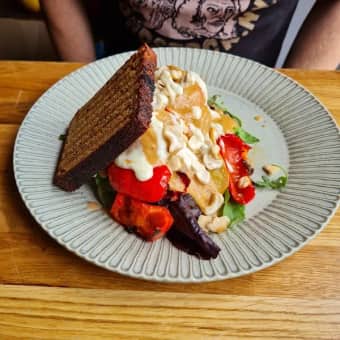
Bloem occupies a former warehouse on the Entrepotdok canal, directly across from Artis Zoo, with a waterside terrace that catches the evening sun. The kitchen is entirely plant based, organic (EKO certified) and gluten free, holding the only full NCV gluten free certification in Amsterdam. Since 2022, the menu has been completely vegan, a decision rooted in the belief that plant based cooking is better for the world. Chef Daniel Hutchinson and his team prepare everything from scratch in a compact kitchen: sourdough bread, fermented and pickled vegetables, lemonades, kombucha, and desserts. Seasonal vegetables form the backbone of a three course menu that changes regularly, with dishes slow cooked, roasted and fermented to draw out depth of flavour. The ground floor seats guests near the open kitchen, while a first floor room with low ceilings offers a quieter setting.
Hearth
Amsterdam4.8
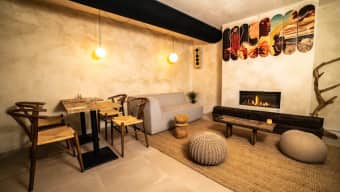
Hearth brings together heart and earth, a philosophy rooted in creative expression and responsibility for the planet. Founded in 2016, the restaurant moved to Camperstraat in Amsterdam Oost in 2022, relaunching as a fully vegan kitchen. Chef Valentino builds each dish through layers of flavour, colour and texture, drawing on Italian, Japanese and Mexican traditions. The dining room is dressed in recovered materials and vintage finds, from Balinese carriage wheels repurposed as light fixtures to natural textures throughout. An open kitchen connects the cooking to the room, while live vinyl DJs and jazz concerts run through the weekend. Signature dishes include spirulina rice sushi with avocado and chipotle mayo, charcoal ravioli with shiitake and teriyaki, and broccoli gnocchi with sun dried tomato and cashew cream. Housemade fresh pasta and several variations of vegan tiramisu remain hallmarks of the menu.

Fruittuinen van west tuincafe
Amsterdam4.5
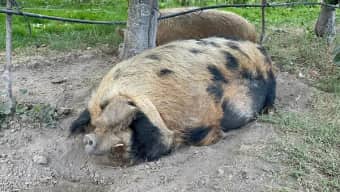
Set on 6.5 hectares of orchard at the edge of Amsterdam, Fruittuin van West is a working biodynamic farm with a small café at its centre. The Tuincafé serves lunches built from what grows just outside, including apples from the orchard's own 22,000 trees. Guests eat at tables and in lazy chairs that look out over the rows of fruit. On pizza evenings, pies are baked thin and crisp in the clay oven on the terrace, topped with mushrooms grown in the on-site cellar and vegetables from partner growers visited each week. The whole operation carries Demeter certification, the biodynamic standard that adds welfare and closed-cycle requirements on top of EU organic. The café offers options for vegans, vegetarians, and meat eaters, with gluten-free desserts available.

Bolenius Restaurant
Amsterdam4.9
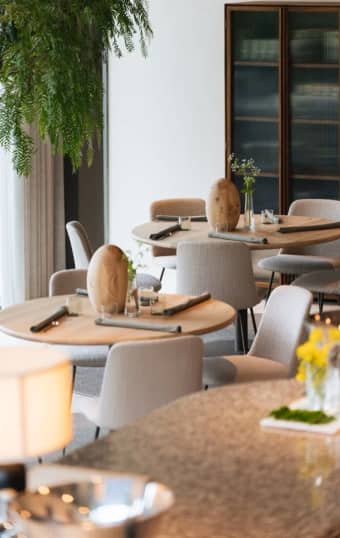
Bolenius brings Dutch produce to the centre of the plate, with a kitchen garden and greenhouse at the edge of Rembrandtpark supplying much of what reaches the table. The restaurant is built around the idea that vegetables, herbs and seasonal ingredients deserve the leading role, while fish and meat play a supporting part. Glass walls open onto the park, blurring the line between garden and dining room. Chef Luc Kusters, a founding figure of the Dutch Cuisine movement, has shaped a menu where roughly 80 per cent of each plate is plant based. Weekly rotations follow the micro seasons, and dishes are built around what the garden and local producers can offer at that moment. A botanical cocktail bar draws on the same herbs growing outside the window.
Choux
Amsterdam4.6
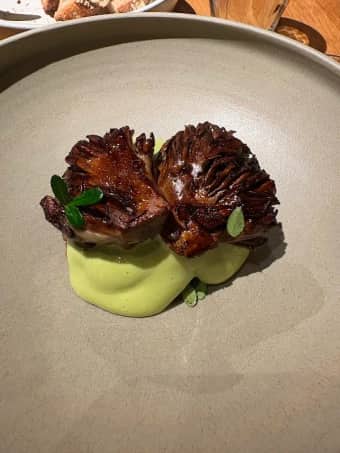
Choux occupies a former tin factory and gin distillery on the IJ waterfront, its bright red facade marking a kitchen built almost entirely around vegetables. Chef Merijn van Berlo and sommelier Figo van Onna opened the restaurant in 2015 after a series of pop-up ventures, driven by the conviction that vegetables should occupy the centre of the plate. The five-course tasting menu, presented orally rather than printed, changes with the seasons and draws from nearby growers for its vegetables, herbs, and flowers. Animal protein plays a supporting role at roughly 10% of the menu, limited to game and shellfish. An open kitchen and industrial interiors softened by warm wood set a tone that is refined yet deliberately relaxed. Van Berlo co-created 621 Ferments with Lindenhoff, upcycling kitchen waste streams into koji-fermented garums. The wine list, overseen by Van Onna through sister company Zuiver Wijnen, centres on natural and biodynamic bottles.
Flore
Amsterdam4.7
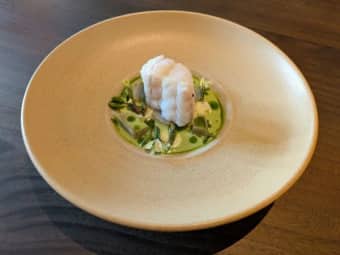
Flore occupies a sunlit room in Amsterdam's De L'Europe hotel, where chef Bas van Kranen cooks with a singular focus on Dutch produce and its seasons. The kitchen works without dairy, beef or pork, building dishes from slowly grown vegetables, wild foraged herbs and line caught North Sea fish. A signature plate of 25 seasonal vegetables, herbs and flowers changes weekly to reflect what the land offers. The dining room seats thirty guests across eleven tables, with a kitchen counter for those who want to watch the brigade at work. Two menus run in parallel: an omnivore path through the Dutch landscape and a fully plant based botanic menu built from more than eighty indigenous plants. Techniques such as fermentation, smoking and ageing add depth, drawing on Van Kranen's training in Japanese kitchens.
Madre
Amsterdam4.5
Madre reimagines Mexican cooking through a fully plant based lens, set in a former Jordaan cinema where original architectural details still frame the dining room. The open kitchen sends out modern interpretations of tacos, tostadas and sharing plates built on corn, beans, roasted vegetables and house made sauces. A wood panelled cocktail bar occupies the old box office, serving an elaborate menu of margaritas and mezcal drinks alongside non alcoholic options. The space is bright and high ceilinged, suited equally to weeknight dinners and weekend brunch. Bread and pastry are supplied by Saint-Jean, a vegan bakery in the same neighbourhood.
Morris en Bella
Amsterdam · Spaarndammerbuurt4.8
100% plant-based fine-dining in an intimate and cozy setting.
De Kas
Amsterdam4.7
De Kas occupies a 1927 municipal greenhouse in Park Frankendael, Amsterdam Oost. The glass structure frames the kitchen's purpose: growing, harvesting and cooking vegetables on the same day. Over 300 varieties of vegetables, herbs and fruits are cultivated across the on-site gardens and a second plot in the Beemster polder, with the menu composed around whatever the harvest delivers each week. Chefs Jos Timmer and Wim de Beer, who took ownership in 2018, apply a light, Mediterranean approach to Dutch-grown produce. The fixed menu changes weekly, shaped entirely by what the gardens yield. Vegetables occupy the centre of every course; fish or meat appears in roughly one dish in ten. In summer, lunch is served on a terrace among the herb beds that supply the kitchen. A single evening seating and an open kitchen designed by Studio Piet Boon set an unhurried pace.
Pesca
Amsterdam4.6
Pesca reinvents the seafood restaurant as a walk in fish market. Guests browse the day's catch on ice, choose their fish, pick a preparation style and sides, and watch the open kitchen bring it together. There are no printed menus and no fixed prices; what is available depends on the morning's delivery, the season and the weather. The format is informal and communal, with long tables, a lively pace and a wine wall where diners select their own bottles. Founded in 2016 on the Rozengracht in the Jordaan, Pesca has since expanded to Rotterdam, Nice and Hamburg, funded in part through equity crowdfunding that turned regular guests into part owners of the concept.
Restaurant Merkelbach
Amsterdam4.3
Restaurant Merkelbach occupies the coach house of Huize Frankendael, the last surviving 18th-century country estate within Amsterdam. Chef Geert Burema, who initiated the Slow Food Chefs Alliance in the Netherlands, has built a kitchen that runs on seasonal, locally sourced ingredients since 2004. The regular lunch menu is fully vegetarian, with herbs picked from the ecological park that surrounds the building. For group dinners, the kitchen extends into meat from Lindenhoff farm in Baambrugge and day-caught North Sea fish from Goede Vissers, both prepared whole-animal. A large garden terrace overlooks Frankendael Park, offering a distinctly green dining setting within the city.
Restaurant Showw
Amsterdam4.9
Born from the shared ambition of chef Dorus Floris and sommelier Lendl Mijnhijmer, Showw occupies a light-filled space in the CrossOver building near Amsterdam's RAI. The open kitchen produces what the duo calls high-end comfort food: dishes built around profound flavours and refined technique, from North Sea crab with satsuma to morel with truffle and black garlic. Interior designer Manon de Groot shaped the 340-square-metre dining room with clay-toned walls, dark flooring, and acoustic artwork. Seasonality drives the menu, which draws on Dutch produce from different regions: Oosterschelde lobster, Alkmaar cheese, and Dutch shrimps each appear in their own right. A full vegetarian tasting menu runs alongside the main carte. Lendl's wine service is distinctive; labels stay hidden until after tasting, encouraging guests to engage with each glass on its own terms. The cellar holds over 750 selections.
URBN By Novotel Amsterdam City
Amsterdam4.2
URBN sits inside the Novotel Amsterdam City on Europaboulevard, a 160 cover restaurant open from early morning through dinner. Chef Frank-Jan Mutsaers leads a kitchen that changes its menu with the seasons, built around what the chef calls fresh, pure and authentic cooking. The space blends a long bar, open lounge seating and a terrace, giving it a relaxed feel that serves hotel guests and locals alike. Weekly rotating chef's specials add variety beyond the core card. The restaurant operates under the hotel's Green Key Gold certification, and 25% of dishes are designated biodiversity friendly. Accor's wider responsible food model, which includes AI tracked food waste reduction through a partnership with Orbisk, shapes kitchen operations behind the scenes.
Café Cress
Amsterdam4.9
Caffé Cress occupies a bright, double-windowed corner on Johan van Hasseltkade, looking out across the IJ from Amsterdam-Noord. The room is laid out like a living room with games and colouring sheets on the tables, a south-facing terrace, and a clear preference for everyday hospitality over occasion dining. The restaurant opened in late 2023 under three co-owners who previously worked together at Floreyn: Cyril Martineau and Niamh Groentjes run the kitchen, while Jeffrey Klepper looks after the floor and the wine list. Cyril brings a French foundation, Niamh layers in Asian influence, and the dialogue between the two shapes the cooking. The menu changes every two weeks around what Cyril finds each morning at the Albert Cuyp market, with bread from city bakery Van As, a cheese course from Fromagerie Kef, and coffee from Zwarts'.
Caffè Toscanini
Amsterdam · Jordaan4.4
Toscanini has occupied the Lindengracht since 1990, when it outgrew its original Goudsbloemstraat space. Chef Leonardo Pacenti, a South African with Italian heritage, leads the kitchen with an approach rooted in improvisation and seasonal availability. The open kitchen, flooded with natural light, lets guests watch the team shape pasta, pull bread from the oven and plate dishes that shift daily. The cooking draws on regional Italian traditions, from Sicilian seafood preparations to Tuscan meat dishes, presented with a personal inflection rather than strict replication. Vegetables from organic farms sit at the centre of most courses, and the menu reads as a response to whatever the market and the season have offered that morning. An entirely Italian wine list emphasises small, lesser known producers. The companion Toscanini Deli around the corner extends the kitchen's reach with sauces, fresh ravioli and speciality products for home use.
Pllek
Amsterdam4.4
Pllek occupies a row of stacked shipping containers on the IJ waterfront at the NDSM wharf, Amsterdam's former shipyard turned creative quarter. Founded in 2012 by Sjoerd Steenbeek, the kitchen puts vegetables at the centre of every menu, with roughly three quarters of the dishes vegetarian and a quarter fully vegan. Chef Dimitry Mulder draws on Asian and international influences to shape a menu that rotates with the seasons. Much of the produce comes from the restaurant's own growing operation in Amsterdam, and the small amount of meat and fish on offer is wild or North Sea caught. Beyond the plate, the space doubles as a cultural venue with weekly live music, yoga sessions and community programming.
Entrepot
Amsterdam4.5
Entrepot occupies a former billiards hall on Entrepotdok, where high wooden beams and an industrial frame meet a warm, lively dining room with an open kitchen at its centre. The cooking follows a near rigid local philosophy: the kitchen works only with ingredients available in the Netherlands, replacing citrus with apple and olive oil with local alternatives. The daily menu is built around what arrives from the market that morning, with vegetables taking the lead and fish and game playing supporting roles. Most dishes are prepared over open fire, giving them a distinctive smoky depth. The wine list, recognised as Wine List of the Year at the 2022 Proefschrift Awards, favours expressive, often biodynamic bottles from France, Italy, Germany and Austria, selected from over 18 specialised importers.
Bonboon
Amsterdam4.7
Bonboon is a fully vegan fine dining restaurant set inside Hotel Mercier in Amsterdam's Jordaan quarter. Chef Aitziber Renteria builds each tasting menu around seasonal vegetables, presenting dishes that look like colourful paintings against a backdrop of contemporary art and atmospheric lighting. The five course menu changes every eight weeks, drawing on flavours from across Asia, Europe and the Middle East. Dishes use fermentation, precise seasoning and layered textures to let vegetables speak for themselves, without relying on meat substitutes or imitation products. Founded in 2018 by Daphne Althoff, the restaurant relocated to the Jordaan in summer 2023. The ground floor cocktail bar serves vegan interpretations of classic drinks alongside light bites.
Lars Amsterdam
Amsterdam4.7
Lars Amsterdam sits on the first floor of a waterfront hotel in the Houthavens, overlooking the IJ. Chef Lars Scharp draws on French foundations and Asian inflections, shaped by years as sous chef at two-starred Aan de Poel. A 400 m² rooftop garden across from the restaurant supplies herbs, vegetables, and edible flowers that anchor the dedicated Green Menu. Menus rotate roughly every five weeks, tracking seasonal shifts. Co-owner Floor Wiggers steers the dining room with warmth. The restaurant holds one Michelin star (since 2022), 15.5 from Gault&Millau, and four radishes from the We're Smart Green Guide.
Lavinia Good Food
Amsterdam4.2
Lavinia Good Food opened on Kerkstraat in 2014, founded by Karel Hessing and Sonia Philipse after more than a decade in Amsterdam's catering scene through their company Food Fantasies. The cafe balances a clean, whole-food approach with a warm, vintage-styled interior where brick walls meet mismatched furniture and items on display are available for purchase. The kitchen works primarily with vegetables, legumes, and whole grains; roughly 80% of dishes are vegetarian or vegan. Spelt pizzettas, shakshuka, acai bowls, and sourdough sandwiches anchor a menu that draws on Middle Eastern and international influences. A second location on Amstelveenseweg and a cafe inside the FOAM photography museum extend the concept across Amsterdam.